


For offshore oil and gas, marine engineering and EPC projects in the UAE, a DNV certified offshore workshop container is more than a portable workspace. It is a certified offshore module designed for lifting, transportation, maintenance work, tool storage and on-site repair in harsh marine environments.
Compared with a standard shipping container, a DNV offshore workshop container must meet stricter requirements for structural strength, offshore lifting, safety, electrical systems, corrosion protection and project documentation. For buyers in Abu Dhabi, Dubai, Sharjah, Jebel Ali and other UAE offshore supply bases, choosing the right container can reduce site risk, avoid delivery delays and improve daily maintenance efficiency.
MagOffshore provides DNV certified offshore containers and customized offshore workshop container solutions for offshore projects, marine contractors and energy companies.
What Is a DNV Certified Offshore Workshop Container?
A DNV certified offshore workshop container is a containerized working unit built for offshore use and certified according to recognized offshore container standards. It is usually equipped with workbenches, storage cabinets, electrical systems, lighting, ventilation, air conditioning, lifting points and safety features.
It can be used as:
Offshore mechanical workshop
Electrical maintenance workshop
Tool room container
Welding support workshop
Hydraulic repair workshop
Offshore maintenance module
Spare parts and equipment service container


For UAE offshore projects, this type of container is commonly used on offshore platforms, drilling rigs, FPSO support operations, marine yards, port bases and remote project sites.
Why UAE Offshore Projects Need DNV Certified Workshop Containers?
The UAE offshore environment requires equipment that can handle high temperature, humidity, salt spray, heavy lifting operations and strict project compliance. A DNV certified workshop container helps buyers meet these requirements in a controlled and verifiable way.
Key reasons include:
Safer offshore lifting and transportation
Better corrosion resistance in marine conditions
Clear certification and inspection documents
Custom internal layout for maintenance work
Faster deployment compared with building a fixed workshop
Easier relocation between offshore and onshore project sites
For contractors working with ADNOC-related projects, offshore marine operators, shipyards or EPC companies, certification and documentation are often as important as the container itself.
How to Choose a DNV Certified Offshore Workshop Container?
When selecting a DNV certified offshore workshop container for UAE, buyers should not only compare price. The right choice depends on certification, usage scenario, layout, equipment, electrical design and delivery documents.
1. Confirm the Certification Requirement
Before ordering, confirm which certification is required by the project owner or end user. For offshore use, buyers usually need a container designed and certified for offshore lifting and marine service.
Ask the supplier to provide:
DNV certificate
Design approval documents
Load test records
Lifting sling certificate if supplied
Welding inspection records
Material certificates
Final inspection report
A reliable supplier such as MagOffshore should be able to provide a complete document package, not only the physical container.
2. Define the Workshop Function
Different offshore workshop containers require different internal designs. A mechanical workshop may need heavy-duty workbenches and tool cabinets, while an electrical workshop may require anti-static flooring, insulated panels and dedicated cable management.
Before production, clarify:
What repair work will be done inside?
How many people will use the workshop?
What tools and machines will be installed?
Is welding, grinding or electrical testing involved?
Is air conditioning required for UAE climate?
Will the unit be used offshore, onshore or both?
This step helps avoid unnecessary cost and ensures the container is practical after delivery.
3. Check the Size and Layout
Common offshore workshop container sizes include 10ft, 20ft and customized dimensions. A 20ft offshore workshop container is often preferred because it offers enough space for workbenches, cabinets, tool racks and maintenance equipment.
Typical layout options include:
Item | Common Options |
|---|---|
Container size | 10ft, 20ft, customized |
Door type | Single door, double door, personnel door |
Workbench | Stainless steel or heavy-duty steel |
Storage | Cabinets, shelves, tool drawers |
Floor | Steel checker plate, anti-slip flooring |
HVAC | Air conditioning, ventilation fan |
Electrical | Lighting, sockets, distribution box |
Safety | Fire extinguisher, emergency light, smoke detector |
For UAE projects, HVAC and ventilation should be considered early because high temperatures can affect worker comfort and equipment reliability.
4. Review Structural and Lifting Design
An offshore workshop container must be suitable for offshore lifting. This means the structure, corner posts, pad eyes and lifting sets must be designed for the required operating conditions.
Important points to check:
Maximum gross weight
Tare weight
Payload
Lifting points
Sling angle
Dynamic lifting factors
Forklift pockets if required
Stacking or non-stacking design
The buyer should confirm that all lifting-related components match the project’s offshore handling requirements.
5. Confirm Electrical and Safety Requirements
Electrical systems are one of the most important parts of an offshore workshop container. The design should match the project location, voltage, frequency and safety requirements.
Common electrical parameters include:
Voltage: 380V / 400V / 415V or project-specific
Frequency: 50Hz or 60Hz
Lighting: LED lighting
Sockets: industrial sockets or customized outlets
Distribution box: protected and clearly labeled
Grounding: proper earthing system
Emergency lighting: optional but recommended
Fire alarm or detector: project dependent
If the container will be used in hazardous areas, the buyer must clearly state the zone classification and explosion-proof requirements before production.
Key Parameters Buyers Should Prepare
To receive an accurate quotation for a DNV certified offshore workshop container, prepare the following information:
Parameter | What to Confirm |
|---|---|
Project country | UAE or other destination |
Application | Mechanical, electrical, tool room, welding support |
Size | 10ft, 20ft or custom |
Certification | DNV offshore certification requirement |
Max gross weight | Required lifting weight |
Internal layout | Workbench, cabinets, shelves, tool racks |
Electrical system | Voltage, frequency, socket type |
HVAC | Air conditioner, ventilation fan |
Fire safety | Extinguisher, detector, emergency light |
Surface treatment | Marine-grade paint system |
Delivery port | Jebel Ali, Abu Dhabi, Sharjah or other port |
Documents | Certificates, drawings, inspection reports |
Providing these details early allows the supplier to design the container correctly and avoid repeated revisions.
How to Inspect a DNV Offshore Workshop Container Before Delivery?
Before shipment to the UAE, buyers should carry out a structured inspection. The inspection should cover the container body, lifting points, internal fit-out, electrical system, safety items and document package.
Pre-Delivery Inspection Checklist
Inspection Area | What to Check |
|---|---|
Certificate | DNV certificate and matching serial number |
Nameplate | Container ID, weight, payload and certification marking |
Structure | No deformation, cracks or visible welding defects |
Lifting points | Pad eyes, shackles and lifting set condition |
Paint | Coating thickness, surface finish and color marking |
Doors | Smooth opening, sealing and locking |
Flooring | Anti-slip surface and proper fixing |
Workbench | Stable, correctly installed and suitable for workload |
Electrical system | Lights, sockets, distribution box and grounding |
HVAC | Cooling, drainage and air flow |
Safety items | Fire extinguisher, emergency light, detector if required |
Documents | Drawings, certificates, test reports and packing list |
For project buyers, the most common issue is not only product quality, but incomplete documents. Always check that the physical container, nameplate and certificate information are consistent.

Common Mistakes When Buying Offshore Workshop Containers
Many buyers focus only on size and price, but offshore projects need more detailed control. Common mistakes include:
Buying a normal shipping container instead of an offshore certified container
Not confirming DNV certification before production
Ignoring final gross weight after internal equipment is installed
Forgetting HVAC requirements for UAE climate
Choosing a layout that is too crowded for actual maintenance work
Missing electrical voltage and socket requirements
Not checking the full document package before shipment
A professional offshore container supplier can help buyers avoid these problems from the design stage.
Why Choose MagOffshore?
MagOffshore supplies certified offshore containers and containerized modules for offshore energy, marine and industrial projects. For UAE buyers, MAG can support customized design, production, certification coordination, inspection and export delivery.
Our offshore workshop container solutions can include:
DNV certified offshore container structure
Customized internal workshop layout
Workbench, cabinets, shelves and tool storage
Electrical system and lighting
HVAC and ventilation
Marine-grade coating
Lifting sets and offshore markings
Complete document package for project submission
FAQ: DNV Certified Offshore Workshop Container for UAE
1. What is the difference between a DNV offshore workshop container and a normal container?
A DNV offshore workshop container is designed for offshore lifting, marine use and certified project requirements. A normal shipping container is mainly designed for cargo transport and usually cannot meet offshore lifting and certification requirements.
2. What size is most common for offshore workshop containers?
The 20ft offshore workshop container is commonly used because it provides enough internal space for workbenches, tools, cabinets and maintenance equipment. However, 10ft and customized sizes are also available.
3. What documents should be provided with a DNV certified offshore workshop container?
The supplier should provide the DNV certificate, drawings, material certificates, welding records, load test records, lifting set certificates, inspection reports and packing documents.
4. Can the workshop container be customized for UAE projects?
Yes. The container can be customized with HVAC, electrical systems, workbenches, storage cabinets, lighting, ventilation, safety equipment and project-specific markings.
5. What should buyers check before shipment?
Buyers should check the certificate, nameplate, lifting points, structure, doors, coating, internal layout, electrical system, HVAC, safety items and all delivery documents.
Conclusion
A DNV certified offshore workshop container should be selected based on certification, lifting safety, internal layout, electrical design, climate requirements and complete documentation. For offshore contractors and energy projects, the best container is not simply the cheapest unit, but the one that can pass project review, support safe operation and work reliably in marine conditions.
If you need a customized offshore workshop container for UAE offshore projects, contact MagOffshore to discuss your certification, layout and delivery requirements.
-
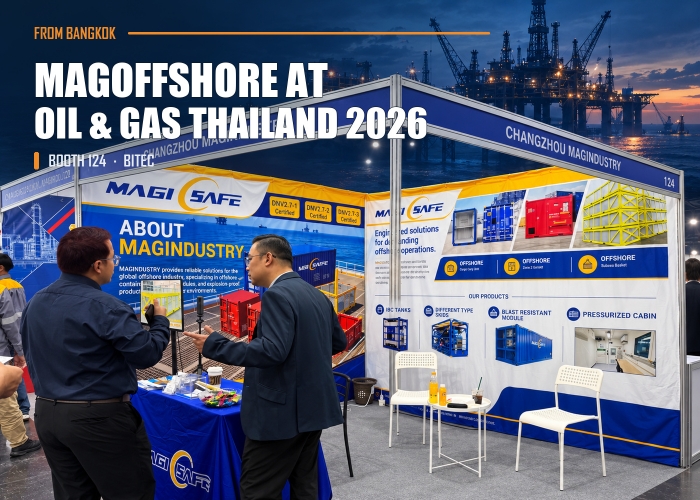 MagOffshore is connecting with energy and offshore professionals at Oil & Gas Thailand 2026 in Bangkok. At Booth 124, the team is presenting offshore cargo carrying units, service modules and engineered solutions while discussing practical project requirements with visitors from across the region.Blog
-
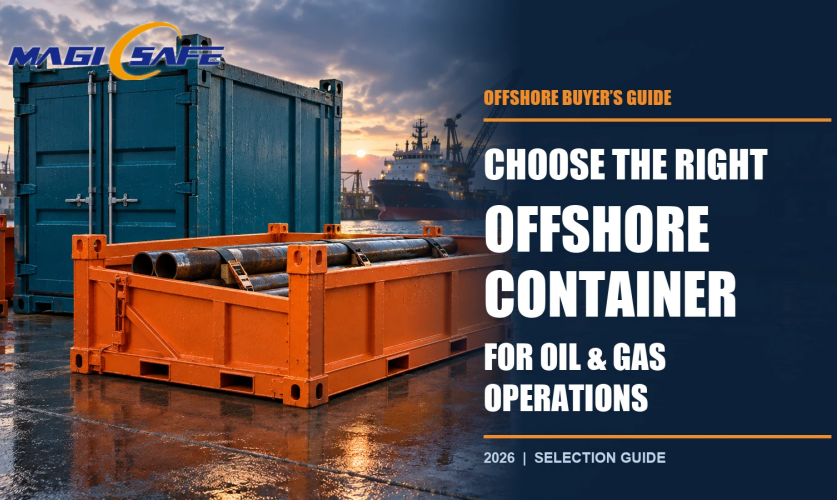 This guide explains how to choose an offshore container based on cargo, loading method, lifting route and certification. It compares common container types and highlights the details buyers should confirm before ordering.News
-
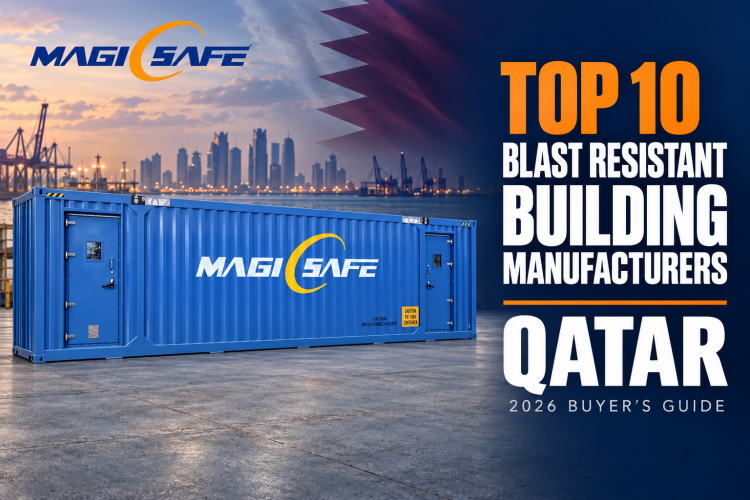 Compare 10 blast resistant building manufacturers for Qatar projects, with guidance on blast ratings, HVAC, standards and buying requirements.News
