


Offshore stainless steel IBC tanks are reusable containers designed for storing and transporting chemicals, lubricants, additives, waste fluids, and process liquids in marine and offshore environments. Buyers should evaluate chemical compatibility, stainless steel grade, tank capacity, frame design, lifting certification, pressure rating, valve configuration, cleaning access, and inspection documents. For offshore lifting and transport, DNV 2.7-1 / DNV-ST-E271 options are commonly requested to improve safety and compliance.
MagOffshore supplies custom offshore stainless steel IBC tanks for chemical storage, marine transport, and offshore lifting applications.
What Is an Offshore Stainless Steel IBC Tank?
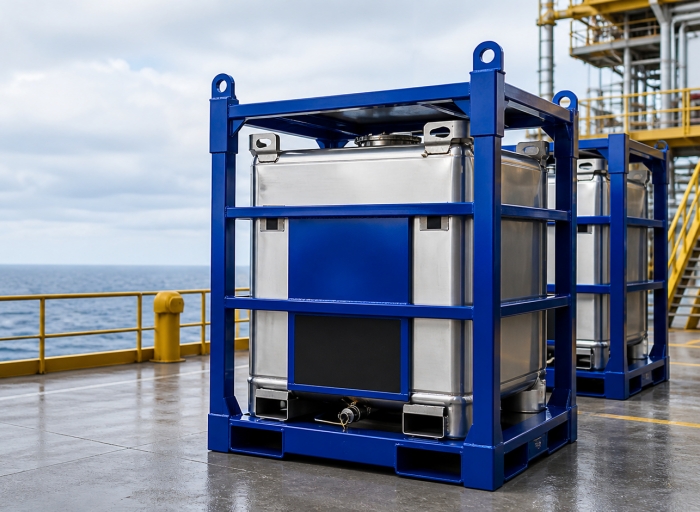
An offshore stainless steel IBC tank is a heavy-duty intermediate bulk container built for offshore platforms, vessels, drilling operations, marine service companies, and chemical supply chains. Compared with standard plastic IBCs, stainless steel IBC tanks offer better strength, longer service life, easier cleaning, and improved resistance to harsh offshore conditions.
Typical applications include:
Offshore chemicals
Drilling additives
Lubricants and hydraulic fluids
Waste oil and recovered liquids
Cleaning agents
Corrosion inhibitors
Water treatment chemicals
Marine industrial fluids
For offshore use, the tank is usually combined with a strong outer frame, forklift pockets, lifting points, pressure relief devices, bottom discharge valves, and optional certification for offshore handling.
Why Chemical Compatibility Matters?
Chemical compatibility is one of the most important factors when selecting a stainless steel IBC tank. A tank that looks strong may still fail early if the stored liquid reacts with the tank body, welds, gaskets, seals, valves, or fittings.
Before purchasing, buyers should confirm:
Chemical name and concentration
Operating temperature
Storage duration
Liquid density
pH value
Chloride content
Cleaning method
Whether the liquid is flammable, corrosive, toxic, or hazardous
Compatibility with stainless steel, gasket material, valve material, and seals
304 vs 316L Stainless Steel: Which One Should You Choose?
For general industrial liquids, 304 stainless steel may be enough. For offshore and chemical applications, 316L stainless steel is usually the safer choice because it contains molybdenum, which improves resistance to chloride-related corrosion compared with 304 stainless steel.
Recommended selection:
Application | Suggested Material |
|---|---|
General non-corrosive liquids | 304 stainless steel |
Offshore chemicals | 316L stainless steel |
Marine environment | 316L stainless steel |
Chloride-containing liquids | 316L or higher alloy, depending on concentration |
Strong acids or special chemicals | Confirm by compatibility review |
Food or pharmaceutical liquids | 316L with sanitary design if required |
Important note: 316L is not suitable for every chemical. Buyers should always check the chemical data sheet and confirm compatibility before ordering.
What Are DNV Options for Offshore IBC Tanks?
For offshore lifting and transport, many buyers request tanks built according to DNV offshore container requirements. DNV 2.7-1 is widely associated with offshore containers, and the current related standard is commonly referred to as DNV-ST-E271 / DNVGL-ST-E271. This type of standard covers offshore container design, manufacture, testing, marking, certification, and inspection requirements.
For offshore stainless steel IBC tanks, DNV-related options may include:
DNV-certified offshore frame
Certified lifting points
Pad eyes and sling set
Offshore container plate
Load test documentation
Weld inspection documents
Material certificates
Periodic inspection support
Marking and nameplate according to project requirements
Buyers should clearly confirm whether they need:
Tank only
Tank with offshore frame
Full DNV-certified offshore tank container
EN 12079-related offshore container compliance
Third-party inspection before shipment
Key Parameters Buyers Should Confirm
Before requesting a quotation, prepare these details:
Parameter | Why It Matters |
|---|---|
Capacity | Common sizes include 350L, 550L, 1000L, or custom volume |
Material | 304, 316L, duplex stainless steel, or special alloy |
Design pressure | Needed for pressurized discharge or vapor control |
Test pressure | Confirms tank pressure safety margin |
Working temperature | Affects material, gasket, and valve choice |
Liquid density | Determines frame strength and payload design |
Chemical type | Decides tank material and seal material |
Certification | DNV, ISO, UN, CE, ASME, or project-specific |
Lifting method | Crane lifting, forklift handling, vessel transport |
Discharge type | Bottom outlet, top discharge, pump connection |
Valve size | Common options include DN40, DN50, DN80, or custom |
Manway size | Affects cleaning and inspection access |
Surface finish | Industrial, polished, sanitary, or pickled/passivated |
Documentation | Material certificate, pressure test report, drawing, inspection report |
How to Choose the Right Offshore Stainless Steel IBC Tank?
1. Start With the Chemical, Not the Tank
The first question should not be “What size tank do I need?” but “What liquid will be stored?” Chemical name, concentration, temperature, and density will decide the tank material, gasket type, valve material, and safety devices.
2. Confirm Offshore Handling Requirements
If the tank will be lifted by crane offshore, a normal industrial IBC frame may not be enough. Offshore use usually requires a stronger frame, certified lifting points, and relevant test documents.
3. Choose the Correct Stainless Steel Grade
For offshore projects, 316L stainless steel is commonly preferred because marine environments often involve salt, humidity, and corrosion risk. However, some strong chemicals may require special alloys or internal lining.
4. Check Cleaning and Maintenance Needs
If the tank will be reused for different liquids, cleaning access becomes important. A large manway, smooth internal welds, drainable bottom design, and proper surface treatment can reduce contamination risk.
5. Review the Documentation Package
A reliable supplier should provide more than a price. For offshore and chemical applications, documents are part of the product.
Recommended documents include:
General arrangement drawing
Material certificate
Welding record if required
Pressure test report
Leak test report
Surface treatment record
Valve and gasket specifications
Lifting test or DNV-related certificate if required
Operation and maintenance manual
Offshore Stainless Steel IBC Tank Buyer Checklist
Use this checklist before placing an order:
Confirm liquid name, concentration, density, and temperature
Confirm whether the tank must be DNV certified
Confirm required capacity and usable volume
Confirm stainless steel grade: 304, 316L, duplex, or special alloy
Confirm gasket and seal material compatibility
Confirm frame type and lifting method
Confirm forklift pocket dimensions
Confirm working pressure and test pressure
Confirm manway, vent, pressure relief, and valve layout
Confirm surface treatment: pickling, passivation, polishing, or coating
Confirm whether inner cleaning is required
Confirm required certificates and inspection reports
Confirm nameplate language and marking requirements
Confirm spare parts: valves, gaskets, seals, caps
Confirm packaging and sea freight protection
How to Inspect the Tank Before Shipment?
Before shipment, buyers should check:
Tank dimensions match the approved drawing
Nameplate information is correct
Welds are clean and continuous
No visible deformation, cracks, or sharp edges
Valves open and close smoothly
Gaskets are correctly installed
Manway seals properly
Lifting points match the design
Pressure or leak test has been completed
Surface is clean, dry, and protected
Documents match the tank serial number
For offshore projects, third-party inspection is strongly recommended when certification, lifting safety, or chemical risk is involved.
Common Mistakes to Avoid
Choosing by Price Only
A low-cost tank may become expensive if it fails inspection, corrodes early, leaks during operation, or lacks offshore lifting certification.
Ignoring Gasket Compatibility
Even if the stainless steel body is suitable, the gasket or seal may fail when exposed to certain chemicals.
Using Standard IBCs for Offshore Lifting
Standard IBC tanks are not automatically suitable for crane lifting or offshore transport. Offshore frames and certified lifting points should be confirmed separately.
Not Checking Liquid Density
A 1000L tank filled with water weighs about 1000kg, but some chemicals are much heavier. The tank and frame must be designed for the real payload.
FAQ
What is the best material for offshore stainless steel IBC tanks?
316L stainless steel is commonly recommended for offshore chemical and marine environments because it offers better corrosion resistance than 304 stainless steel. For highly corrosive liquids, further compatibility review is required.
Do offshore IBC tanks need DNV certification?
Not always. If the tank will be crane-lifted, transported offshore, or used in regulated offshore projects, DNV 2.7-1 / DNV-ST-E271 related options may be required. The buyer should confirm this with the project owner or end user.
Can stainless steel IBC tanks store acids?
Some acids can be stored in stainless steel tanks, but not all. Compatibility depends on acid type, concentration, temperature, and storage time. Always confirm before ordering.
What documents should come with an offshore stainless steel IBC tank?
Common documents include drawings, material certificates, pressure test reports, leak test reports, valve specifications, nameplate information, and DNV or third-party certificates if required.
Conclusion
Choosing an offshore stainless steel IBC tank is not just about capacity and price. The correct decision depends on chemical compatibility, stainless steel grade, offshore handling method, certification needs, valve layout, pressure rating, and inspection documents. For marine and offshore projects, 316L stainless steel and DNV-related options are often worth considering to improve safety, service life, and project acceptance.
To confirm chemical compatibility, tank capacity, material grade, and certification requirements, contact MagOffshore for a customized offshore IBC tank solution.
-
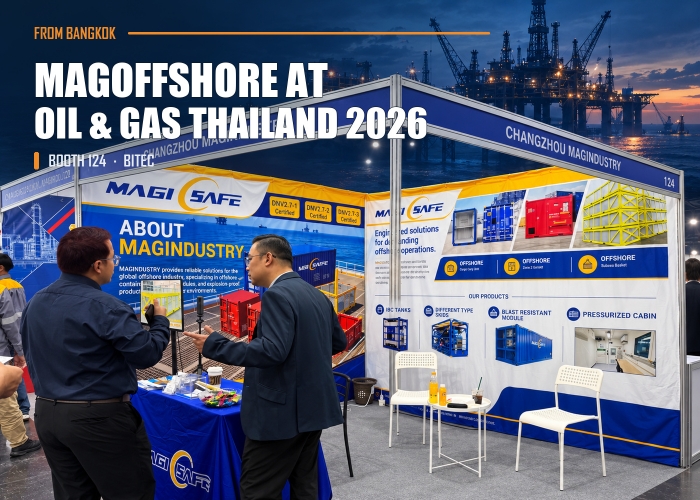 MagOffshore is connecting with energy and offshore professionals at Oil & Gas Thailand 2026 in Bangkok. At Booth 124, the team is presenting offshore cargo carrying units, service modules and engineered solutions while discussing practical project requirements with visitors from across the region.Blog
-
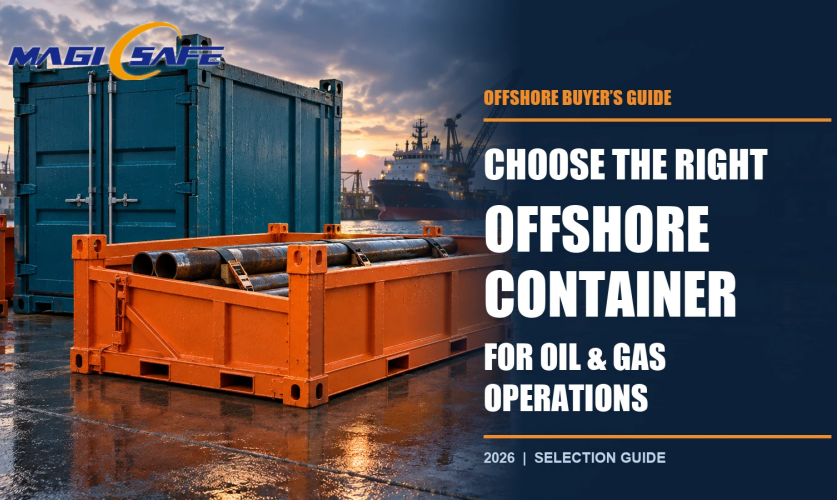 This guide explains how to choose an offshore container based on cargo, loading method, lifting route and certification. It compares common container types and highlights the details buyers should confirm before ordering.News
-
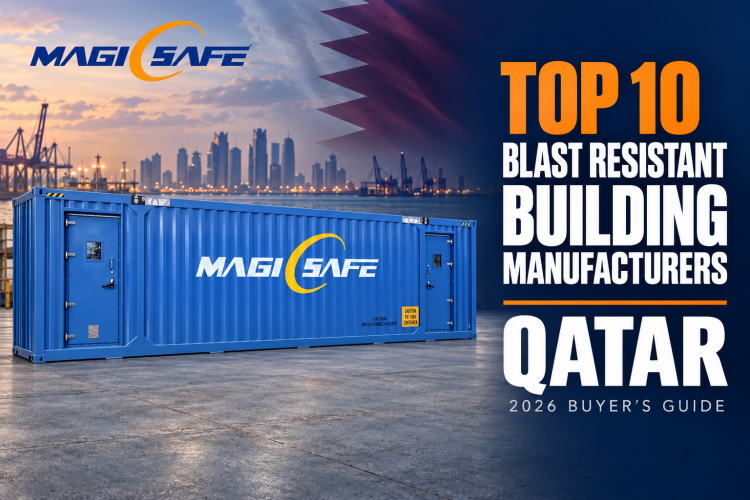 Compare 10 blast resistant building manufacturers for Qatar projects, with guidance on blast ratings, HVAC, standards and buying requirements.News
