


Singapore is an easy place to buy a standard plastic IBC. Stainless steel is a different market. Buyers usually choose between a Singapore stockist, an Asian fabricator building to order, and a specialist European or American manufacturer whose tank must be imported. Those routes differ sharply in lead time, design control, documentation and after-sales support.
This guide compares ten companies worth considering in 2026. It does not suggest that all ten manufacture in Singapore. The ranking uses four criteria: relevance to stainless steel IBCs, evidence on official sources, practical access for a Singapore project, and engineering or customization depth.

What Is a Stainless Steel IBC Tank?
An intermediate bulk container sits between a drum and a tank container. A typical liquid IBC holds roughly 500 to 2,000 litres and can be moved by forklift without decanting its contents. Stainless steel is chosen when the cargo, cleaning regime, temperature or reuse cycle makes high-density polyethylene unsuitable.
The term is used loosely, which causes specification mistakes. Three product families frequently appear under the same search term:
A UN 31A metal IBC is a transport package for liquids. Its design, marking, test level and periodic inspection status matter when dangerous goods are carried.
A sanitary or process IBC is built around cleanability, drainage and contamination control. It is not automatically approved for dangerous-goods transport.
An offshore chemical tank is engineered for lifting between a vessel and an offshore installation. Its frame, lifting set and certification basis go beyond a warehouse tote.
A 1,000-litre stainless tank with forklift pockets is therefore not automatically suitable for road transport, sea freight or offshore lifting. The intended duty must be defined before suppliers can be compared meaningfully.
How We Selected the Manufacturers
The list was reviewed against official company and product information available in August 2026. We looked for a genuine stainless steel IBC or clearly defined metal tote range, evidence of customization, published design details and a credible route to supply a Singapore buyer.
Local availability received weight, but it was not the only criterion. Singapore projects in chemicals, food processing, marine services and offshore energy often need designs that local packaging distributors do not hold in stock. The list therefore includes both local suppliers and overseas manufacturers.
Quick Comparison of the Top 10 Suppliers
Rank | Company | Product focus | Best fit |
|---|---|---|---|
1 | Pureshine Chemicals Enterprise | Standard and customized stainless IBCs | Local industrial procurement |
2 | MagOffshore | Engineered IBC and offshore chemical tanks | Offshore and project-specific designs |
3 | Global Barrels Industries | New and reconditioned tote tanks, 500–2,000 L | Local fleet support |
4 | Jiangsu Pretank Process | Sanitary IBCs and process tanks | Food, beverage and process duties |
5 | SCHÄFER Container Systems | Standard, heated, aseptic and dangerous-goods IBCs | High-specification reusable fleets |
6 | UCON Container System | Liquid, heated, aseptic and bulk-material systems | Integrated filling and cleaning systems |
7 | automationstechnik | Heated and insulated UN 31A/Y IBCs | Viscous products |
8 | TOTE Systems | Reusable stainless liquid totes | Drum replacement programs |
9 | Dinggin Hardware | 500–3,000 L liquid, solid and powder IBCs | Custom capacity and geometry |
10 | Fulait Packaging | 304/316L IBCs and custom tanks | Buyer-controlled custom sourcing |
Top 10 Stainless Steel IBC Tank Suppliers Serving Singapore
1. Pureshine Chemicals Enterprise
Pureshine is the most direct starting point for a buyer who needs a tank in Singapore rather than a long-distance custom project. The company has operated locally since 2000, lists a Tuas address and publishes 1,000-litre stainless steel tank models alongside plastic IBCs, drums and accessories.
Its advantage is proximity. Buyers can discuss fittings, spare parts, delivery and inspection without managing an overseas factory. Pureshine also states that it provides customization. Its public pages do not establish that every tank is fabricated locally, so the quotation should identify the legal manufacturer, country of origin and unit-specific documents. Pureshine best suits conventional industrial storage and transport where local coordination matters more than complex process integration.
2. MagOffshore
MagOffshore is a stronger fit when the tank is part of an offshore or engineered equipment package. The company supplies Standard IBC tanks, offshore chemical tanks and larger storage tank containers for marine, offshore and energy applications.
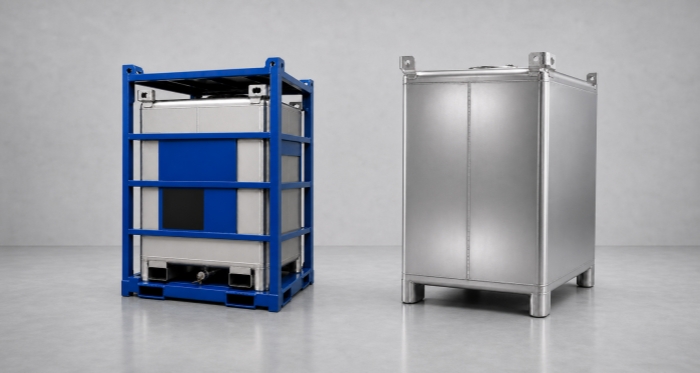
The important distinction is the frame. A standard metal IBC is usually designed around forklift handling and stacking. An offshore tank may also require certified padeyes, defined sling geometry, offshore handling loads and third-party surveillance. MagOffshore can address the tank and structural package together.
The design basis—ordinary industrial use, dangerous-goods transport or offshore lifting—must be stated at enquiry stage. Not every IBC carries the same approval. MagOffshore is most relevant for custom projects rather than immediate local stock.
3. Global Barrels Industries
Global Barrels operates from Tuas and supplies drums, IBCs and stainless steel tote tanks. Its published range covers 500 to 2,000 litres and includes new and reconditioned packaging.
That mix benefits plants managing a fleet rather than a single purchase. Local reconditioning support can help with cleaning, inspection, valves and replacement units. New and reconditioned equipment must, however, be evaluated separately. For sensitive service, request previous-cargo history, cleaning records and acceptance criteria. For regulated transport, check the marking and current test status of the specific unit.
4. Jiangsu Pretank Process
Pretank provides direct evidence of Singapore experience: its official case page shows a 1,000-litre stainless steel IBC supplied to a Singapore distillery. Its wider business covers stainless process equipment for food and beverage production.
This makes Pretank more relevant to hygienic liquid handling than a general packaging fabricator. Distillery, edible-oil and ingredient projects care about complete drainage, internal finish, weld treatment and cleanable fittings as much as strength. Those requirements should be measurable. “Food grade” alone does not define roughness, passivation, gasket compatibility or clean-in-place performance.
5. SCHÄFER Container Systems
SCHÄFER offers one of the broadest specialist ranges here: standard IBCs, heated containers, aseptic units, dangerous-goods containers and custom designs. Published capacities for standard stainless IBCs run from 500 to 1,500 litres, with options including agitators, insulation and level measurement.
This is the type of supplier to approach when an IBC is a long-term process asset rather than commodity packaging. Aseptic construction, heating and pressure or vacuum capability require deeper engineering than fitting a different valve to a standard tote. SCHÄFER is not presented as a Singapore stockist; import lead time, parts and service need to be established.
6. UCON Container System
UCON focuses on systems rather than the tank alone. Its range includes liquid IBCs designed for low-residue cleaning, electrically heated units, aseptic containers, pressure vessels and bulk-solids IBCs. It also supplies filling, cleaning, dosing and discharge equipment.
That integration matters when the real problem is product loss, slow changeovers or unreliable transfer. A good tank can still perform badly if its outlet, pump, cleaning head and receiving equipment do not match. UCON is a logical candidate for pharmaceutical, specialty chemical or high-value food processes, but excessive for simple static storage.
7. automationstechnik
automationstechnik's e-IBC addresses products that become too viscous to discharge at ambient temperature. The published 1,000-litre design combines electrical heating and insulation with 304, 316L or 316Ti stainless steel. The company states UN 31A/Y approval for applicable Packing Group II and III liquids.
Purpose-designed heating around the shell and bottom can reduce cold zones and slow discharge compared with improvised external heaters. The system is relevant to polyols, adhesives, waxes and similar media. Electrical supply, controls and hazardous-area classification still require project review.
8. TOTE Systems
TOTE Systems manufactures reusable stainless liquid IBCs in the United States. Its range spans 180 to 550 US gallons on a common 42-by-48-inch footprint. T304 stainless steel is standard, 316 is optional, and the tanks use sloped bottoms with configurable valves, vents and gaskets.
The common footprint appeals to plants replacing groups of 55-gallon drums because it simplifies rack and filling-station planning. Inch-based connections, US-oriented documentation and imported spares deserve careful review before adoption in Singapore. It is strongest where a buyer wants a standardized reusable fleet.
9. Dinggin Hardware
Dinggin is a dedicated stainless steel IBC manufacturer with a published 500 to 3,000-litre range for liquids, powders and solids. Its breadth is useful, but purchasers must identify the product family precisely. Powder bins depend on hopper angle and discharge behavior; liquid IBCs depend on venting, pressure capability and leak-tight closures.
Dinggin is worth considering for custom Asian sourcing when the buyer has a clear specification and inspection plan. Current Singapore delivery terms, certification scope and after-sales arrangements must be confirmed directly.
10. Fulait Packaging
Fulait markets 304 and 316L stainless IBCs for chemical, food and pharmaceutical applications. Published options include different capacities, internal finishes, heating or cooling, mixing, level indication and custom fittings.
The range is commercially attractive, but configuration control is essential. A website can mention UN certification and sanitary construction across a family while an approval applies only to a defined model. Fulait best suits buyers prepared to control drawings, materials, welding, testing and final records themselves or through an inspector.
Important Standards and Design Requirements
UN 31A Is a Design Approval, Not a Sticker
The code 31A identifies a metal IBC for liquids. Suitability depends on the full marking and approval: packing group, maximum density, hydraulic test pressure, closures, design type and inspection status. Changing a valve or vent can affect the approved configuration. For dangerous goods moving by sea, the shipment also has to meet the IMDG Code and carrier acceptance requirements.
Offshore Lifting Is a Separate Requirement
DNV-ST-E271 and ISO 10855 address offshore containers and lifting sets. They become relevant when a tank is lifted in open-sea operations. Offshore lifting certification does not replace the packaging or tank approval required for the contents. Adding lifting eyes to a standard IBC does not turn it into an offshore tank.
304 Versus 316L Is Only the First Material Decision
316L often performs better than 304 in chloride-bearing environments, but neither grade is universally resistant. Concentration, temperature, contaminants and cleaning chemicals affect compatibility. The material schedule must cover the shell, weld filler, outlet, valve trim and other wetted parts. Elastomer selection is equally important.
Cleanability Must Be Designed
For hygienic or high-value products, focus on geometry rather than the phrase “sanitary grade.” Check bottom slope, true drain point, internal weld profile, surface finish, crevices around fittings and access for inspection. A tank retaining several litres after every batch can cost more than the initial price difference.
What Singapore Buyers Should Check Before Ordering
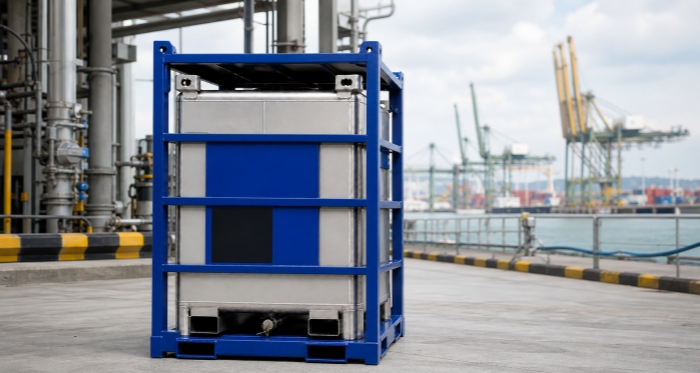
Start the RFQ with the liquid, not the tank. Provide the safety data sheet, composition, density, viscosity and temperature range. State whether the unit is for static storage, road movement, sea freight or offshore lifting.
Then define:
Working capacity, gross mass and maximum liquid density.
Shell and wetted-part materials, including gaskets and valve seats.
Manway, vent, pressure and vacuum limits.
Outlet position, bore, connection and valve protection.
Forklift entry, stacking condition and permitted lifting method.
Heating, insulation, earthing, level measurement or agitation.
Internal finish, drainage target and cleaning method.
Required approval, inspection and document package.
Singapore's humidity and salt-laden air can attack carbon-steel frames and fasteners even when the tank is stainless. Outdoor units need a suitable coating system, drainage and maintenance plan. Tropical temperature also does not remove heating requirements when viscosity or crystallization controls discharge.
How to Choose the Right Manufacturer
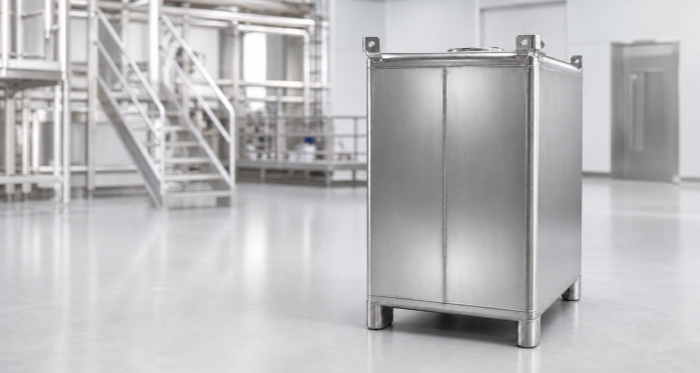
Use local support as a deciding factor only after technical fit is established. For a standard replacement tote, a Singapore supplier can reduce downtime. For a sanitary vessel, weld quality and cleaning design matter more. For an offshore tank, structural engineering, certification surveillance and the manufacturing record book become central.
Send the same data sheet to every supplier and compare deviations, not only prices. A professional quotation should state the factory, design basis, materials, included tests, certification route, document index, delivery term and exclusions. If the supplier cannot state which approval applies to the proposed model, the offer is not ready for technical comparison.
For imported custom units, agree drawing approval, material verification, weld inspection, leak or pressure testing, dimensional checks and final document review before production. Photographs are useful, but they do not replace traceable records or witnessed tests for critical service.
Why Consider MagOffshore for Singapore Projects?
MagOffshore is best considered where an IBC or chemical tank must work within an offshore, marine or engineered logistics system. The company can coordinate the stainless vessel, protective frame, handling interfaces and project documentation rather than treating the tank as isolated packaging.
That capability is relevant to custom payloads, offshore lifting and equipment integration. It is not a claim that one standard design suits every cargo. For a meaningful proposal, provide the liquid data, capacity, operating location, transport route, lifting method, certification basis, quantity and delivery date through the MagOffshore contact page.
Frequently Asked Questions
Is a stainless steel IBC the same as an ISO tank container?
No. An IBC is a smaller portable package commonly handled by forklift. An ISO tank is a pressure vessel in an ISO frame for intermodal transport and follows a different approval framework.
Can any stainless steel IBC be used offshore?
No. Offshore lifting requires a suitable frame, lifting set, design loads, testing and certification. Forklift pockets or ordinary lifting lugs do not prove offshore suitability.
When should a buyer specify 316L instead of 304?
Specify the alloy after reviewing the exact liquid and cleaning chemistry at operating temperature. 316L often improves chloride resistance, but it is not a universal solution.
What documents should arrive with a new IBC?
The package commonly includes an approved drawing, material records, inspection and test reports, operating instructions, parts list and any unit-specific transport or lifting certificates required by the order.
Final Recommendation
For a standard tank with local support, begin with Pureshine and Global Barrels. For a custom offshore or marine project, compare MagOffshore with the certification basis stated explicitly. Pretank is a credible starting point for sanitary food and beverage work because it has a published Singapore reference. SCHÄFER, UCON and automationstechnik become stronger when heating, aseptic duty or system integration justifies specialist import.
The shortlist should narrow quickly once the liquid, cleaning method and transport route are defined. If those inputs are missing, a low quotation is not evidence of value—it usually means the suppliers are pricing different equipment.
-
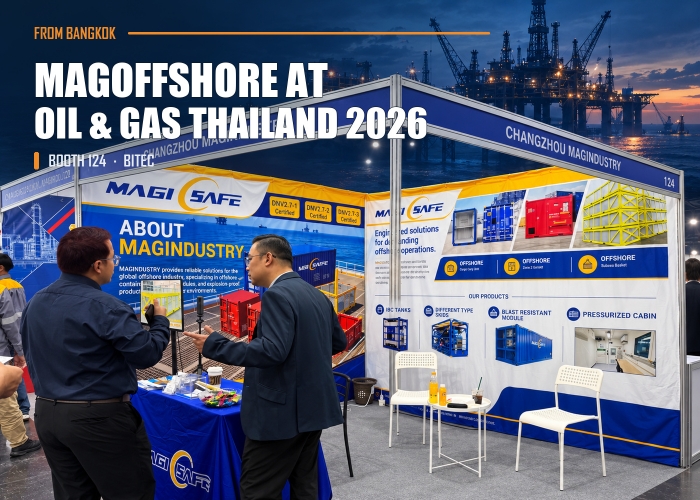 MagOffshore is connecting with energy and offshore professionals at Oil & Gas Thailand 2026 in Bangkok. At Booth 124, the team is presenting offshore cargo carrying units, service modules and engineered solutions while discussing practical project requirements with visitors from across the region.Blog
-
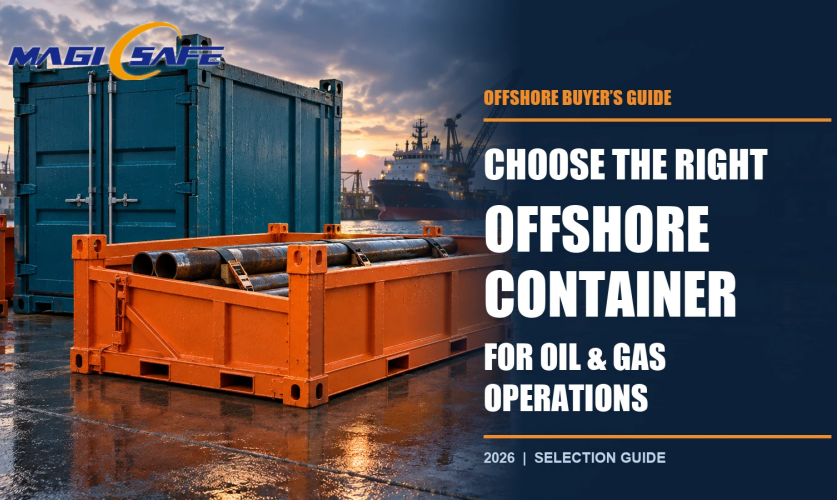 This guide explains how to choose an offshore container based on cargo, loading method, lifting route and certification. It compares common container types and highlights the details buyers should confirm before ordering.News
-
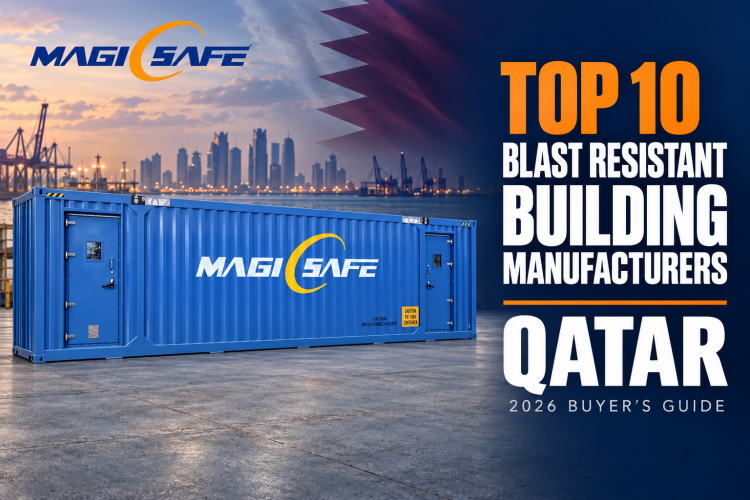 Compare 10 blast resistant building manufacturers for Qatar projects, with guidance on blast ratings, HVAC, standards and buying requirements.News
